A new project, SKillAIbility, has been launched to ensure artificial intelligence (AI) and automation benefit all manufacturing workers, including people with disabilities and older employees, with Martel taking a leading role in communication and dissemination. The €3 million project, funded by Horizon Europe and the Swiss State Secretariat for Education, Research and Innovation (SERI), aims to redefine how humans and machines collaborate, prioritizing worker wellbeing.
The SKillAIbility project comes at a critical time for the manufacturing sector, which faces an unprecedented combination of labor shortages, an aging workforce, and rapid technological advancements. With predictions suggesting that up to 19% of jobs could be impacted by AI, manufacturing is at the forefront of these changes. Paradoxically, over 70% of European manufacturers report difficulties in finding qualified workers. SKillAIbility’s mission is to resolve this contradiction by creating win-win solutions where technology supports workers, ensuring both productivity and inclusivity.
Led by Politecnico di Milano, SKillAIbility brings together 14 partners from nine European countries, including Martel Innovate from Switzerland. The project will:
- Develop innovative assessments to optimize human-machine collaboration.
- Create inclusive training programs for building skills to work alongside AI and automation.
- Design adaptive technologies that prioritize human needs.
- Provide actionable policy recommendations for inclusive technology adoption.
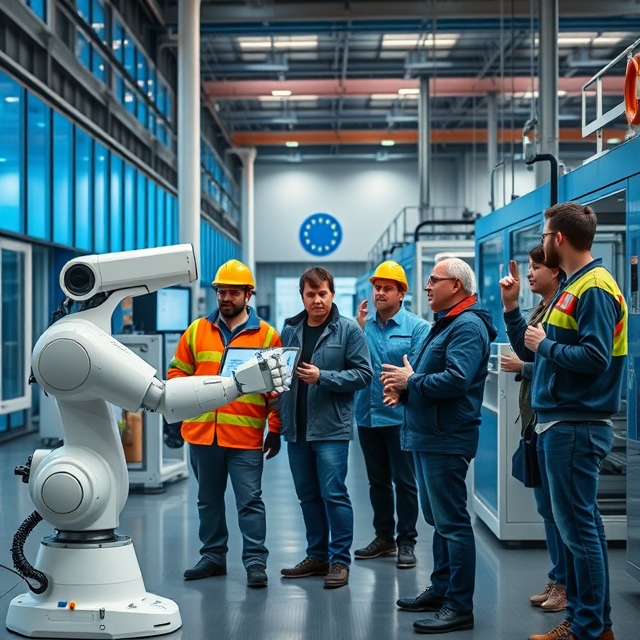
Central to the project are Learning Factories, immersive manufacturing environments designed to provide hands-on experience with cutting-edge technologies. These facilities will be accessible to a broad range of workers, including those with disabilities, such as deaf employees.
Martel’s role in SKillAIbility
Martel leads the communication and dissemination activities for SKillAIbility, ensuring the project’s findings reach policymakers, industry stakeholders, and the wider public. In addition to communication, Martel contributes to multiple work packages, leveraging its expertise to promote the project’s human-centric and inclusive vision for manufacturing.
The project’s approaches will be validated at testbed facilities in Italy, Norway, Spain, Sweden, and Greece. These sites will enable the development and demonstration of technologies and training programs that bridge gaps between human capabilities and automation, fostering a collaborative manufacturing workforce.
Toward Industry 5.0
SKillAIbility aligns with the European Union’s Industry 5.0 vision, which emphasizes advancing technology alongside human wellbeing. By making manufacturing jobs more accessible to diverse populations, including individuals with disabilities, the project aims to create a more resilient and inclusive workforce.
About SKillAIbility
SKillAIbility unites leading organizations from across Europe, including research institutions, industry bodies, and advocacy groups. The project partners include Politecnico di Milano (Coordinator), Norwegian University of Science and Technology, SINTEF AS, University of Patras – Laboratory for Manufacturing Systems, Chalmers University of Technology, Università degli Studi di Trento, University of Groningen, MADE Competence Center, Education Ministry of Basque Government, European Association of Manufacturing Technologies, European Union of the Deaf, Latvian Umbrella Body for Disability Organizations, Martel Innovate, and the National Institute for Insurance against Accidents at Work.
The SKillAIbility project is funded by the European Union’s Horizon Europe research and innovation programme under Grant Agreement No. 101177783. Additional funding has been provided by the Swiss State Secretariat for Education, Research and Innovation (SERI).