
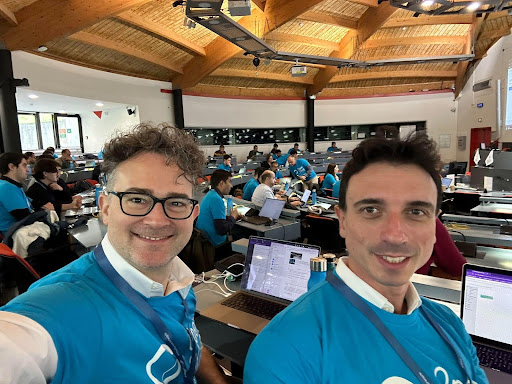
The ETSI Software and Standards for Smart Networks and Services (SNS4SNS) Conference & Hackfest, held in Sophia Antipolis, France, on November 12–14, 2024, was a thriving convergence of open-source software, standardisation, and groundbreaking innovation in the realm of telecommunications.
The SNS4SNS conference brought together key stakeholders from across the telecommunications landscape, including decision-makers, technologists, standardisers, developers, and researchers. Attendees included representatives from Operators, Telecom Suppliers, SMEs, various Standard Defining Organisations (SDOs), ETSI and 3GPP, open-source communities, as well as universities and research centres. The event aimed to explore the synergistic potential of open-source software, standardisation, and research in constructing future networks that are sustainable, resilient, and interoperable.
The event featured presentations, panel discussions, and interactive demonstrations showcasing the latest advancements in open-source software and standards for smart networks and services. The discussions centered around crucial themes, including: open-source and agility accelerating the adoption of standardized technologies; standardisation, ensuring interoperability and global connectivity; research, driving innovation for future communication challenges; collaboration, fostering cross-pollination between industry, academia, and open-source communities.
The event highlighted the importance of open networks for Europe and the future of 6G. Open-source projects were recognised for their pivotal role in enabling telco cloud transformation, reducing redundancy, and fostering innovation. The event also underscored the need for increased collaboration between open-source communities and SDOs to reduce fragmentation and unnecessary complexity. It emphasised the importance of reference implementations, demonstrations, and proofs of concept in accelerating standardisation and promoting interoperability.
Event Highlights
The event highlighted the importance of open networks for Europe and the future of 6G. Open-source projects such as OpenSlice, OpenCAPIF, MEC, OSM, and initiatives like CAMARA were recognised for their pivotal role in enabling telco cloud transformation, reducing redundancy, and fostering innovation.
For instance, OpenSlice acts as an open-source operations support system (OSS) prototype, facilitating Network as a Service (NaaS) following ETSI NFV principles and ensuring interoperability with platforms like OSM and Kubernetes. OpenCAPIF offers a standardised API framework that simplifies the exposure and consumption of telecom network services, critical for fostering innovation across multiple verticals. MEC and CAMARA emphasise edge computing standardisation and API harmonisation, driving application deployment at the network edge with seamless integration into 5G and beyond.
Furthermore, the updated version of Open-Source MANO (OSM) exemplifies a powerful platform for dynamic network service orchestration, providing capabilities such as lifecycle management of cloud-native functions and integration with Kubernetes environments. These tools not only accelerate standardisation efforts but also demonstrate the importance of practical interoperability and reference implementations.
These open-source projects and frameworks are also well recognised and positioned in the recently published SNS Reliable Software Networks WG whitepaper, testifying the harmonisation and synergy of European 6G development efforts.
Martel’s Role and Vision
This event aligns closely with Martel’s dedication to driving innovation in the telecommunications sector. Through its active involvement in the Horizon 2020 Affordable 5G project, Martel has pioneered advanced OSM enhancements, anticipating the convergence between the telecom and the cloud worlds. In that project, Martel collaborated with OSM developers to create a new feature enabling the dynamic placement of Kubernetes network functions across cloud-edge environments within OSM-managed NFV infrastructures. Although this feature did not ultimately make it into the main release at the time, such functionality and features have now been included in the latest iteration, showcasing Martel’s pioneering and visionary efforts in the field.
With extensive expertise in collaborative research and innovation, Martel plays a key role in promoting the development and adoption of open network technologies. Its focus on open-source solutions and next-generation network orchestration highlights Martel’s commitment to advancing interoperable and secure communication systems. Participation in initiatives such as SNS4SNS further solidifies Martel’s position in the field.
If you’re interested in collaborating on open and future-ready network technologies, let’s connect! Together, we can shape a competitive and resilient open network future for Europe.