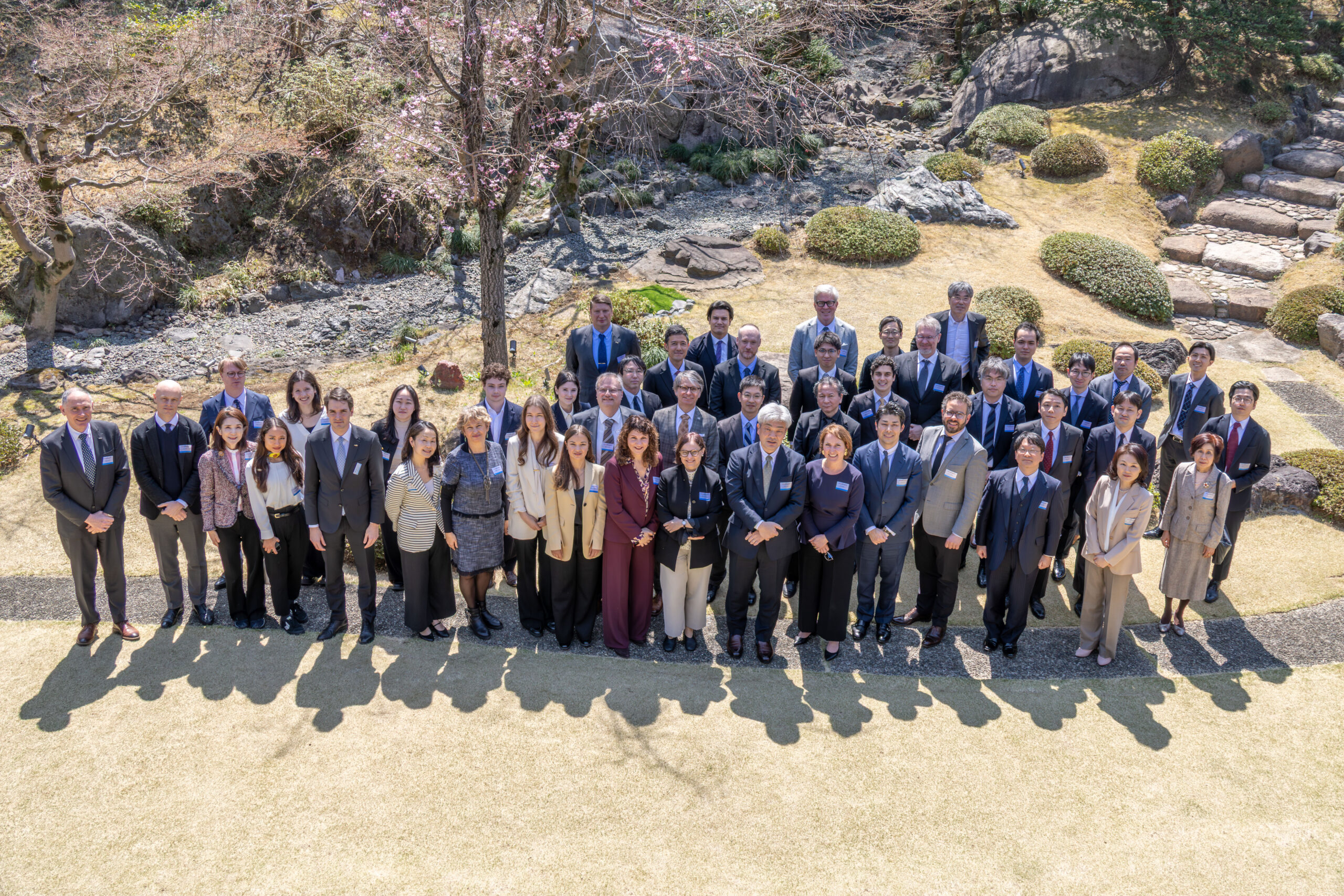
Martel has returned from a highly impactful participation in the second edition of the EU–Japan Digital Week 2026, which focused on advancing collaboration in emerging and disruptive technologies, such as artificial intelligence (AI), semiconductors, quantum computing, and high-performance computing, while addressing critical challenges in digital infrastructure, standardisation, and cross-border interoperability. The event brought together policymakers, researchers, and industry leaders at a critical moment marked by geopolitical uncertainty and the growing need for trusted international digital collaboration. Throughout the week, Martel actively contributed to discussions shaping the future of EU–Japan cooperation across key domains.
The EU-Japan Digital Week is the annual flagship event of the EU-Japan Digital Partnership. Launched in 2022 and under ministerial leadership, this partnership is a flexible cooperation instrument that goes beyond dialogue and exchange of information between Japan and the EU with the view to deliver concrete deliverables in line with our respective priorities for a digital economy and society.
There are plenty of countries and economies around the world who want to work on a value-based trusted and secure digital economy and this is where we are focusing on. Japan is our first partner in this conversation as we share the same values and policies. The EU-Japan digital partnership is a core initiative of the European Union in a broader global community towards, a trusted secured digital society.
Peter Fatelnig, Minister-Counsellor for Digital Economy Policy
Delegation of the European Union to Japan
Pre-week Hackathon on Interoperability of Digital Public Infrastructure
The week began with a pre-event hackathon centered on interoperable digital public infrastructure, bringing together international teams to develop solutions for cross-border identity and trusted data exchange. Six teams from Europe and Japan explored innovative approaches, refining their ideas through mentoring sessions and interim presentations. Co-organised by Dr. Franck Le Gall (EGM, INPACE, France) and Prof. Noboru Koshizuka (The University of Tokyo, Japan), the hackathon fostered hands-on experimentation in trusted data sharing and cross-border identity verification. This collaborative energy carried through the rest of the week. Three finalist teams were selected, and the overall winner was announced the following Thursday after participants voted, following brief presentations from each finalist team.
Semiconductor Collaboration and Innovation Workshop
A key highlight was the two-day semiconductor workshop organised by Dr. Francis Balestra (CNRS, INPACE, France), where experts explored opportunities for collaborative innovation in advanced computing, smart sensors, and sustainable semiconductor value chains. The discussions focused on energy efficiency, resilience, and strengthening the EU–Japan ecosystem for next-generation chip technologies. The workshop featured 13 sessions expanded in two days covering all aspects of semiconductors, with contributions from both European and Japanese speakers. Numerous shared areas of interest emerged, highlighting strong potential for future joint R&D projects.
At the policy level, a closed-door workshop organised by INPACE partner, VUB, addressed cooperation on emerging and disruptive technologies such as AI and quantum computing. Participants explored governance frameworks and regulatory alignment, reinforcing the importance of a shared, rules-based digital landscape.
Martel also engaged in discussions on standardisation during a joint session with leading standards bodies, underlining the role of global standards in enabling interoperability and scaling innovation across borders.
Strong Momentum for Global Digital Cooperation
For Martel, attending the second edition of the EU–Japan Digital Week 2026 was especially important for several reasons. First, it provided an opportunity to witness the results of the work carried out as a partner in the INPACE project, alongside collaborators in both Japan and Europe. It also helped us better understand how to position our activities within the broader landscape of international collaboration, while enabling us to further leverage our Horizon Europe projects, where we are already working closely with Japanese partners. In key areas such as AI, quantum computing, supercomputing, chips, and semiconductors, we are very pleased to see that our efforts are aligning with broader international collaboration.
Dr. Monique Calisti, CEO at Martel Innovate
EU-Japan AI4Good cooperation
A standout moment of the week was the AI4Good cooperation session on extreme-scale computing. Dr. Monique Calisti delivered a keynote contribution on AI for climate and sustainability. She highlighted the importance of embedding “Sustainability by Design” into AI systems and aligning technological development with the UN Sustainable Development Goals. Her intervention emphasised how exascale infrastructures can drive real-world impact in climate action, health, and sustainable cities, while ensuring ethical and inclusive AI deployment. This event, co-organised by Dr. Rossen Apostolov (INPACE, NAISS, Sweden), RIKEN, Juelich Supercomputing Centre, and NAISS, highlighted cooperation in high-performance computing (HPC) between Europe and Japan.
Participants discussed the use of flagship supercomputers to support artificial intelligence applications addressing societal challenges such as climate, health, and sustainable cities. The session also aimed to strengthen scientific collaboration between the EU and Japan through cooperation between RIKEN and JULICH, and establish a structure for sustained collaboration and an operational framework for Fugaku–Jupiter cooperation.
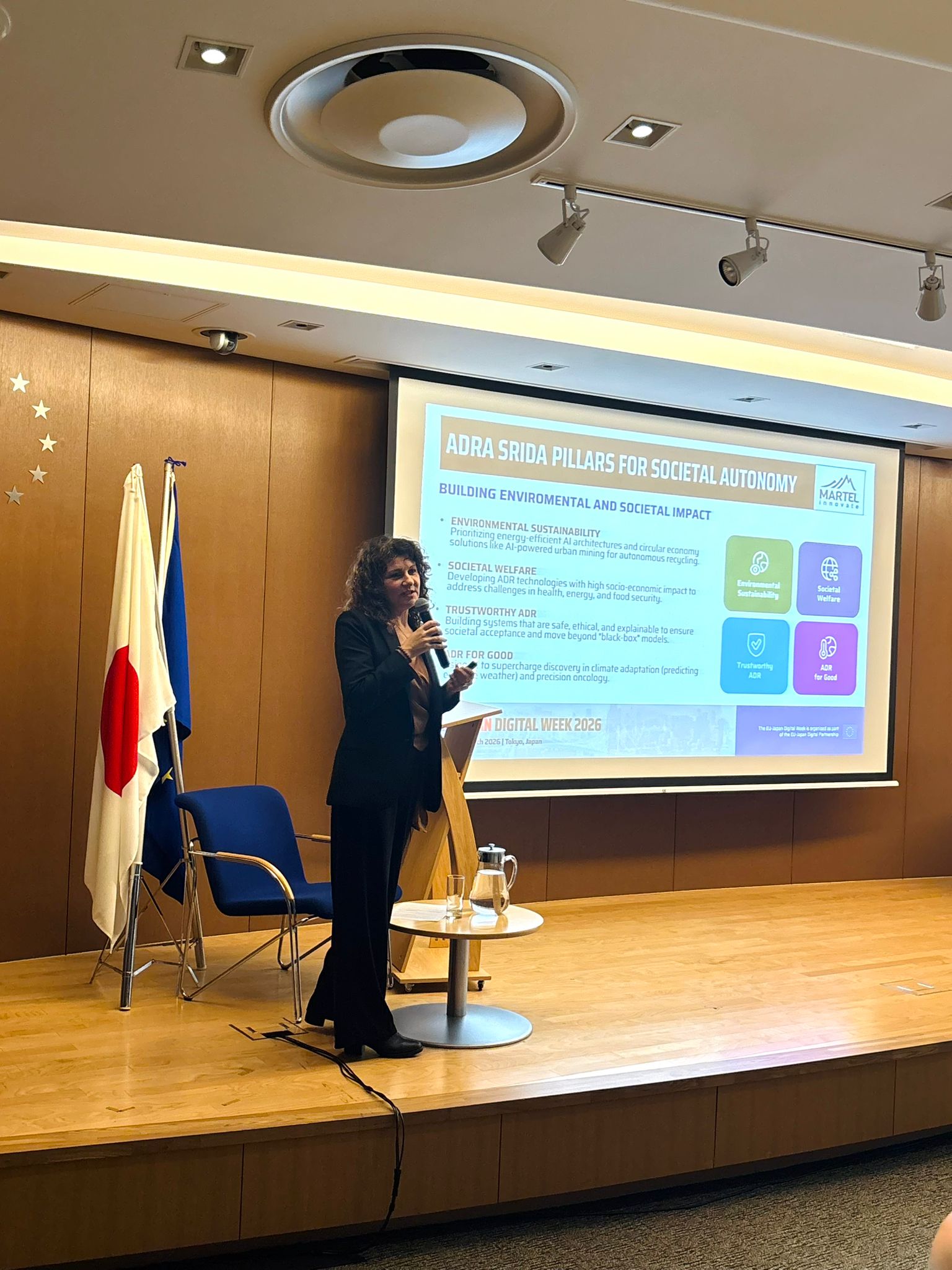
In her capacity as a member of the board of directors of the Association for AI, Data and Robotics (ADRA), Dr. Monique Calisti highlighted the key priorities of ADRA SRIDA 2025-2027, strategic plan, placing particular emphasis on how to leverage exascale infrastructures such as Fugaku and JUPITER to contribute to the achievement of the United Nations Sustainable Development Goals. By embedding the principle of ‘sustainability by design’ into AI systems, the focus shifts from how we build to why we build. The aim is to minimise environmental impact, reduce algorithmic bias and ensure that no one is left behind.
Martel further contributed to strategic discussions on the future of EU–Japan cooperation, including a high-level panel on digital collaboration beyond 2026 and participation in the ICT Stakeholder Roundtable. Key topics included Beyond 5G/6G, AI in networks, cybersecurity, disinformation, and the role of public-private partnerships.
The week concluded with forward-looking exchanges on digital diplomacy and Japan’s association to Horizon Europe, highlighting new pathways for research and innovation collaboration between Europe and the Indo-Pacific.
Advancing EU–Japan Digital Cooperation: Insights from the Week and Next Steps
A wrap-up and networking session highlighted the main outcomes of the 2nd EU–Japan Digital Week 2026. Organised by Dr. Svetlana Klessova (G.A.C. Group, INPACE, France) and Adam Kapovits (Eurescom, INPACE, Germany), the session provided participants with key takeaways from the thematic discussions, covering digital policy, technological innovation, and international collaboration. Dr. Svetlana Klessova, the INPACE coordinator, invited each panelist to identify one key element in their respective fields that should be prioritised for future cooperation.
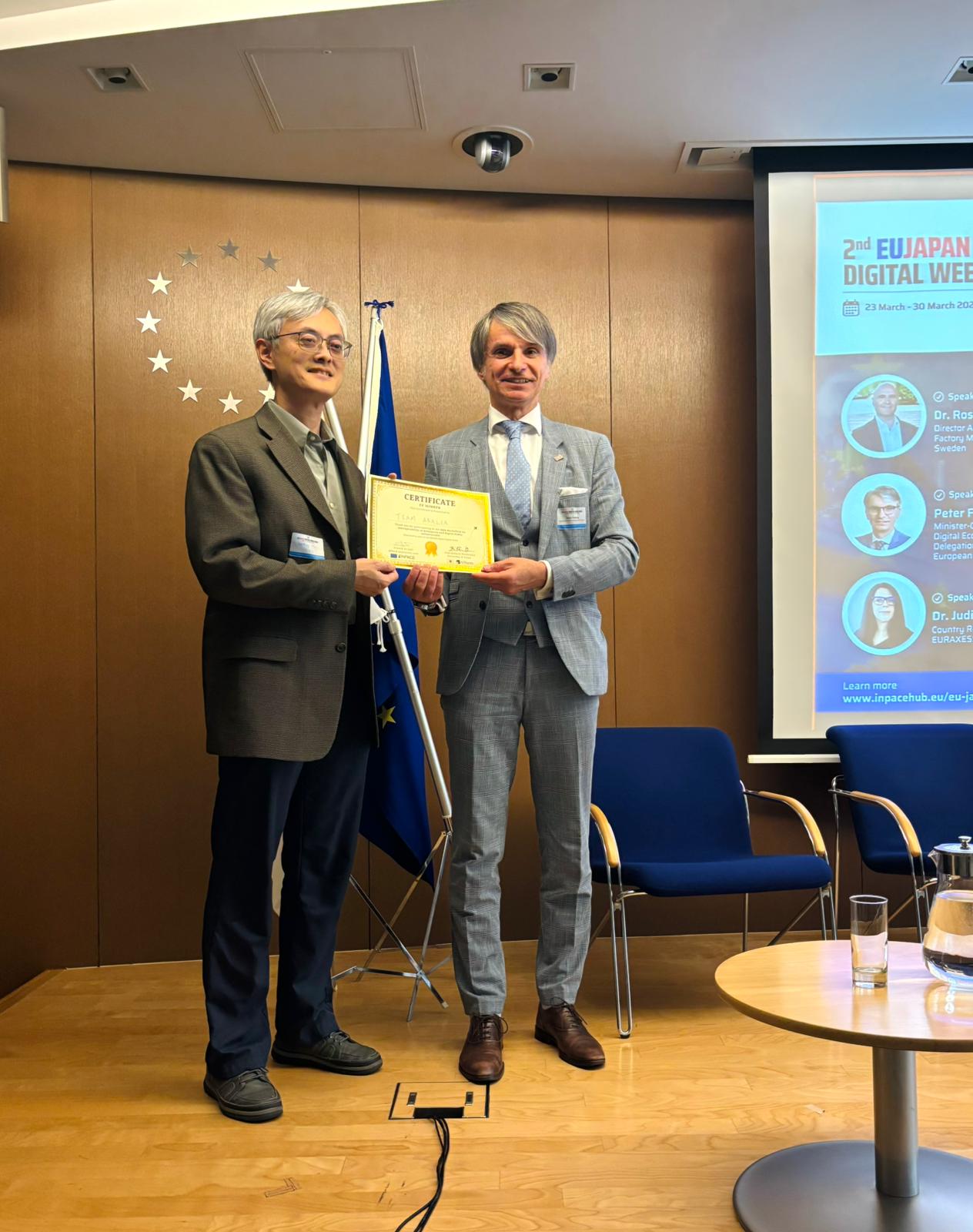
The hackathon concluded with final presentations by the participating teams, who showcased their solutions for interoperable digital public infrastructure. Participants were able to vote, and after deliberation, Frank Le Gall ultimately declared ARALIA the overall winner of the hackathon. In addition, Ann Molin, from Hack for Earth, selected two of the three finalists ARALIA and Smartsense to take part in an online acceleration programme. This programme offers participants the opportunity to refine their business strategy and communication skills. EURAXESS also introduced European funding opportunities available to researchers and innovators in Japan, alongside networking activities aimed at fostering new partnerships. Monique contributed to the panel discussion of the session, providing key insights on EU-Japan digital cooperation beyond 2026.
Martel’s participation reinforced its role as a key actor in fostering international cooperation at the intersection of technology, policy, and innovation. The insights gained during EU–Japan Digital Week 2026 will feed directly into ongoing and future initiatives, supporting the development of secure, sustainable, and human-centric digital ecosystems.
As global challenges become increasingly complex, the partnership between Europe and Japan stands out as a cornerstone for building a resilient and inclusive digital future.