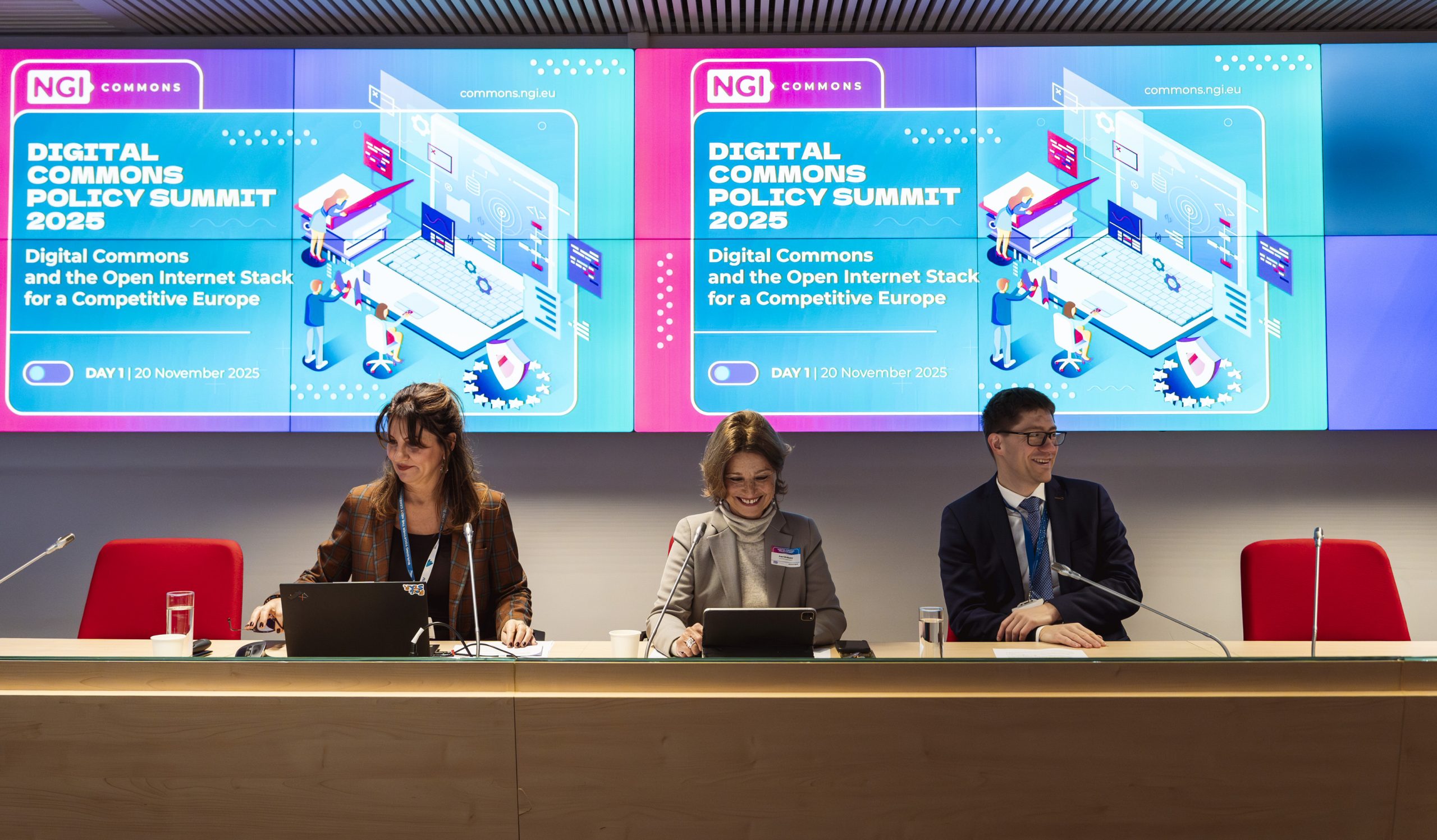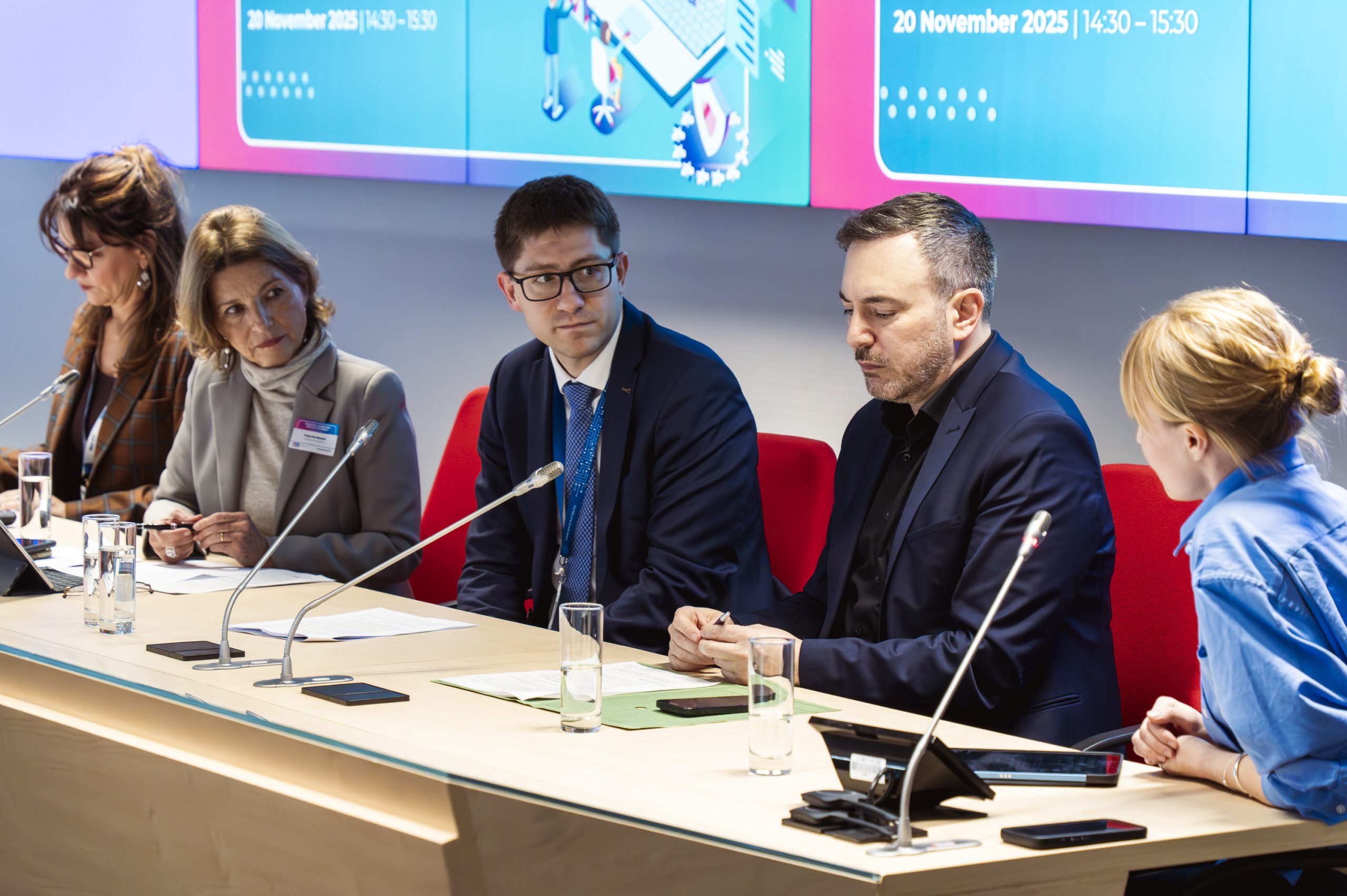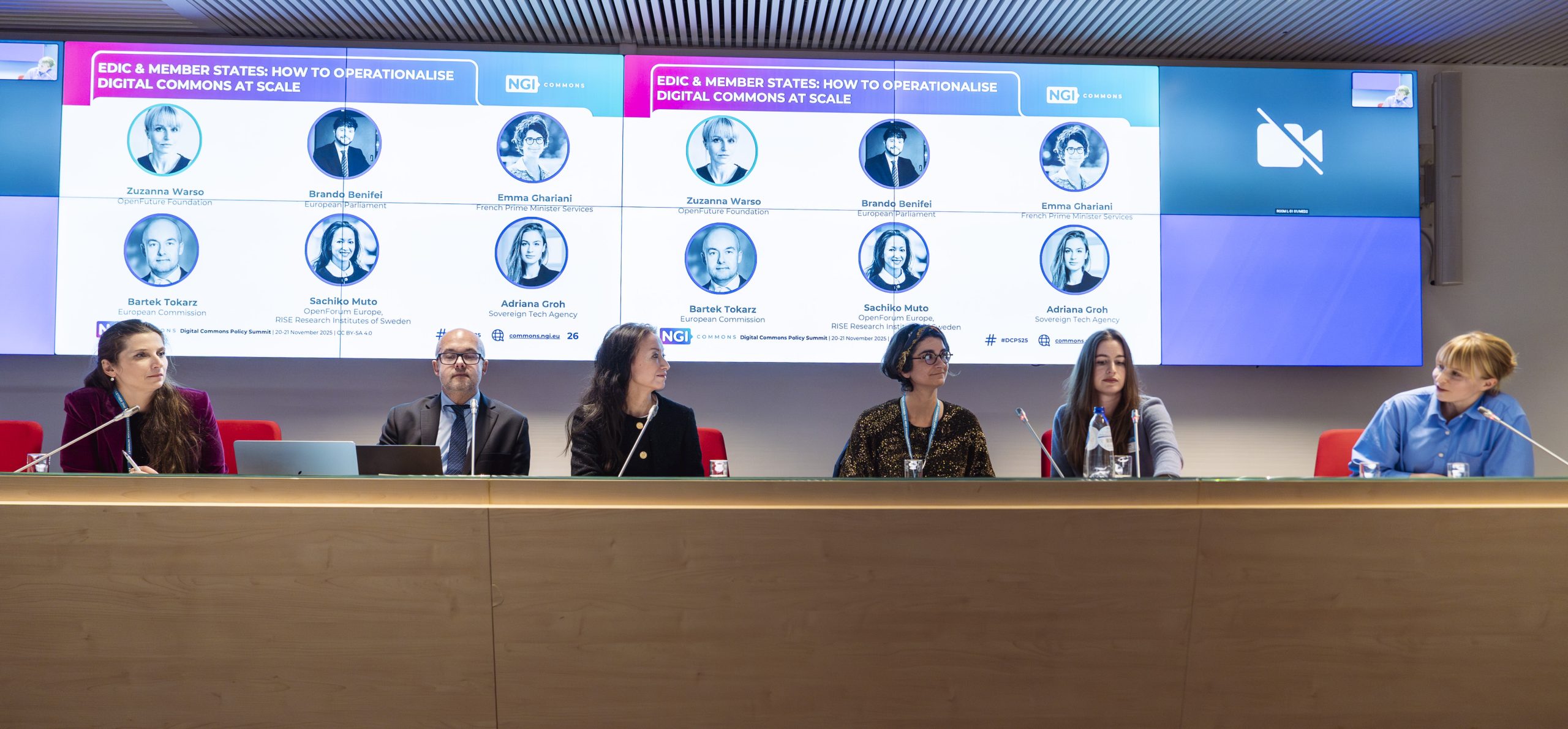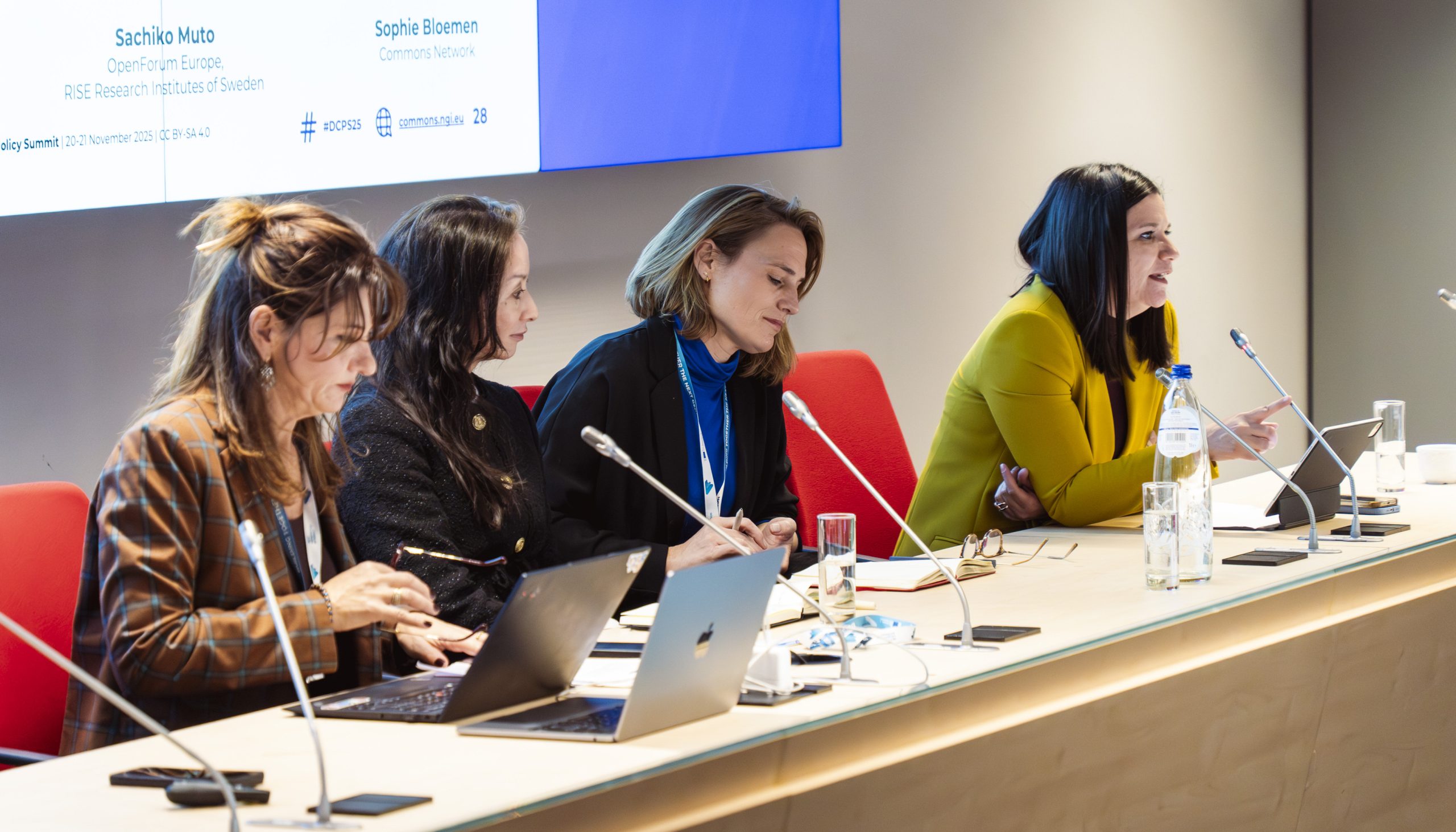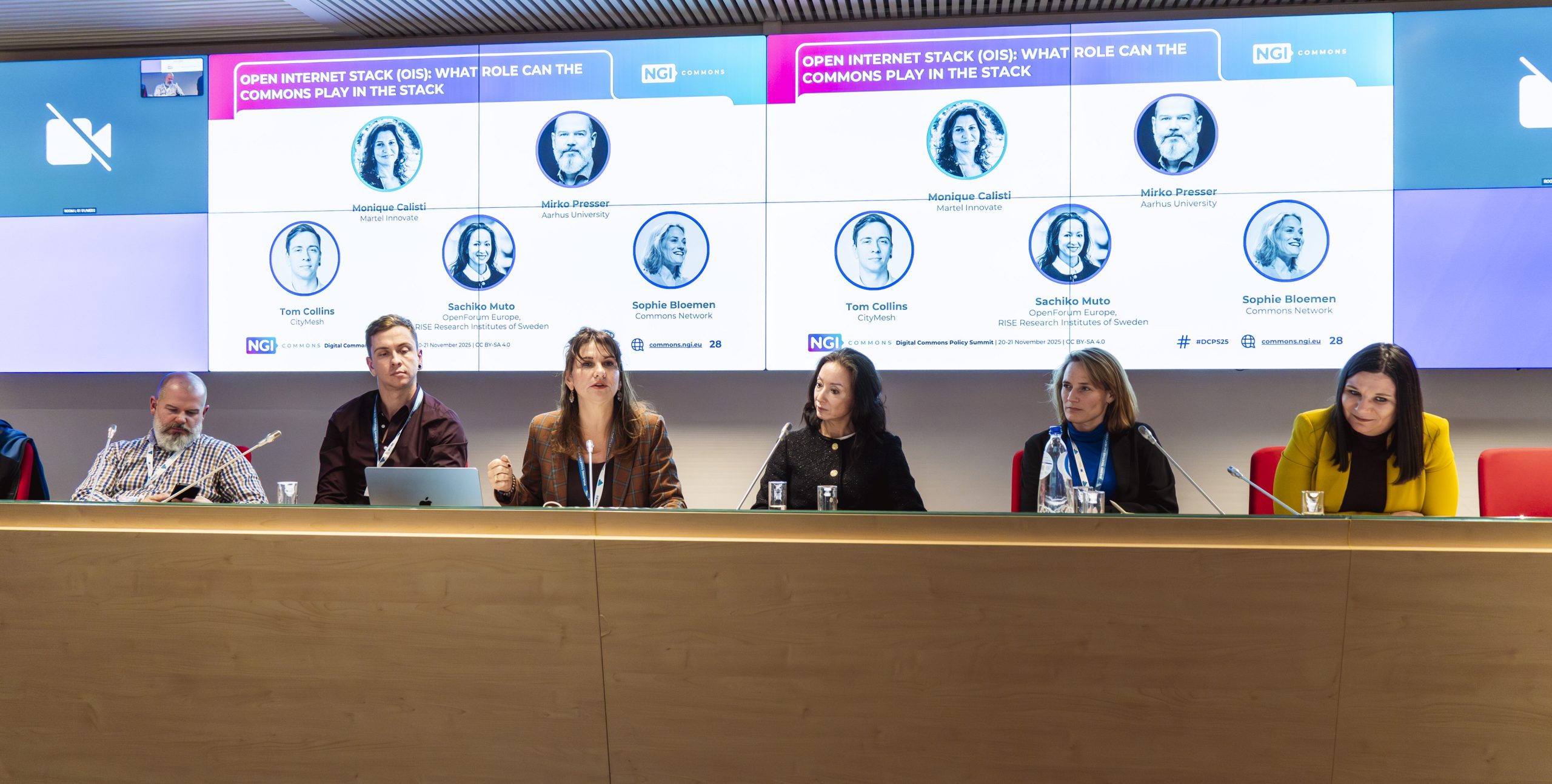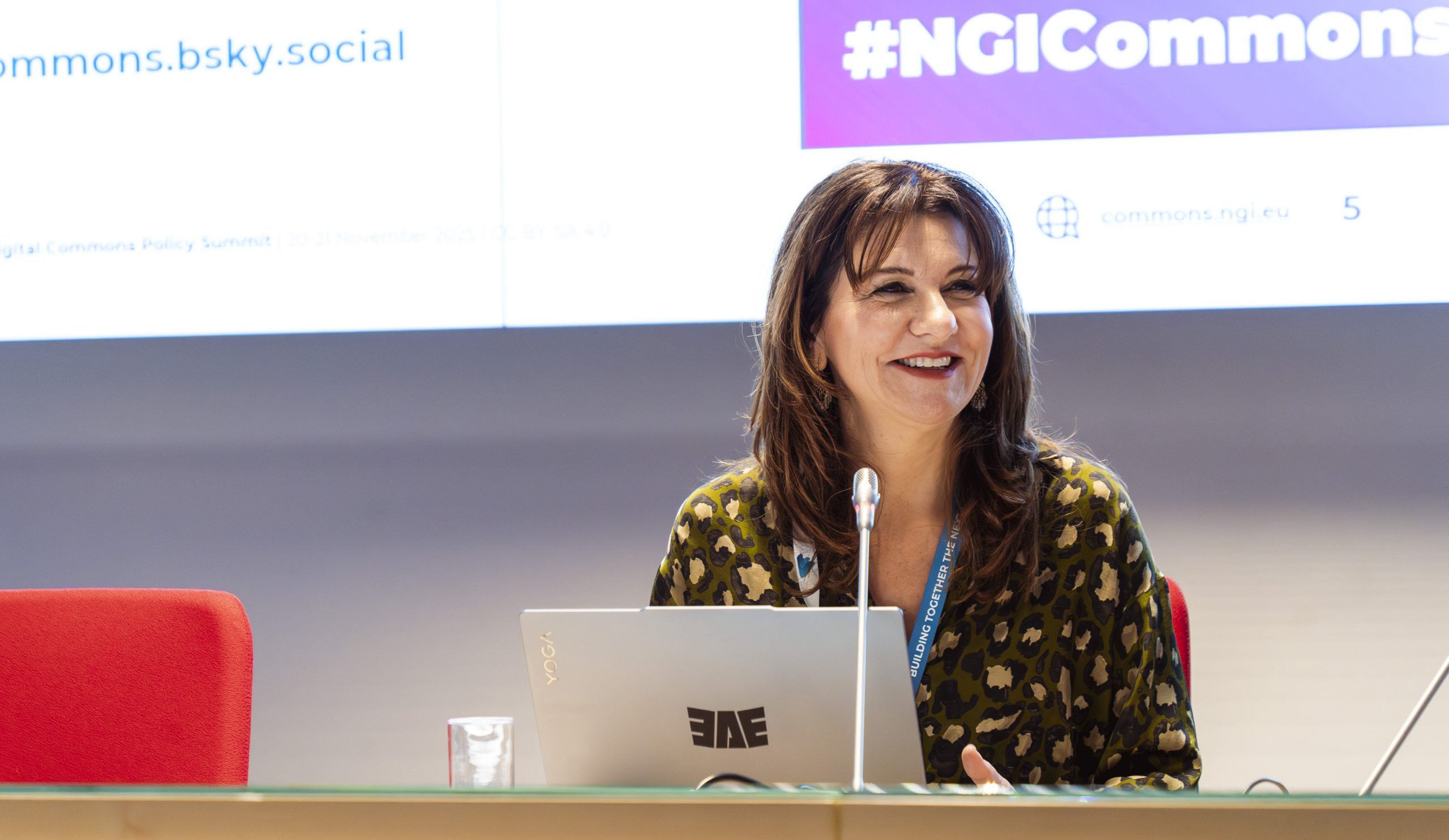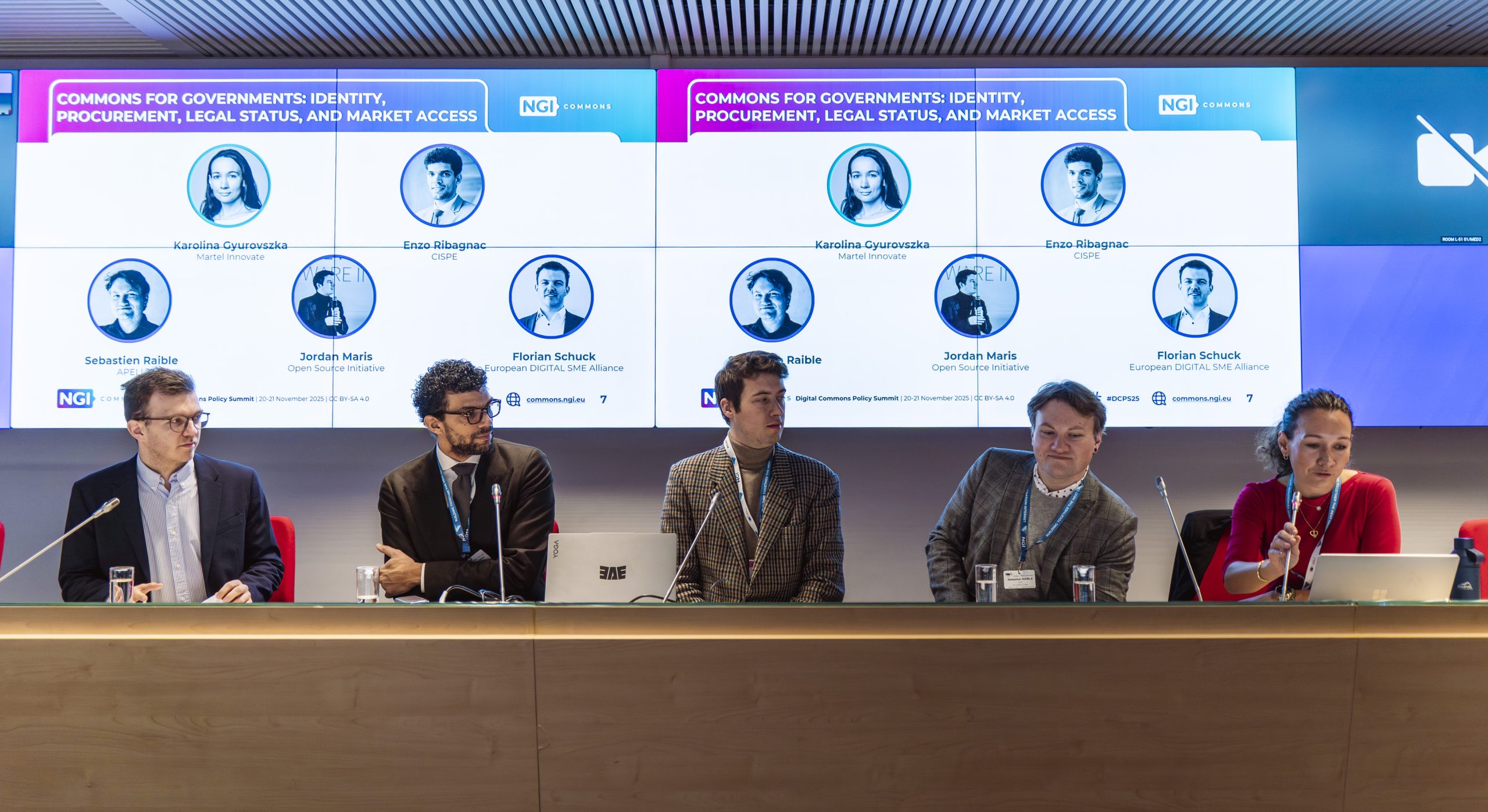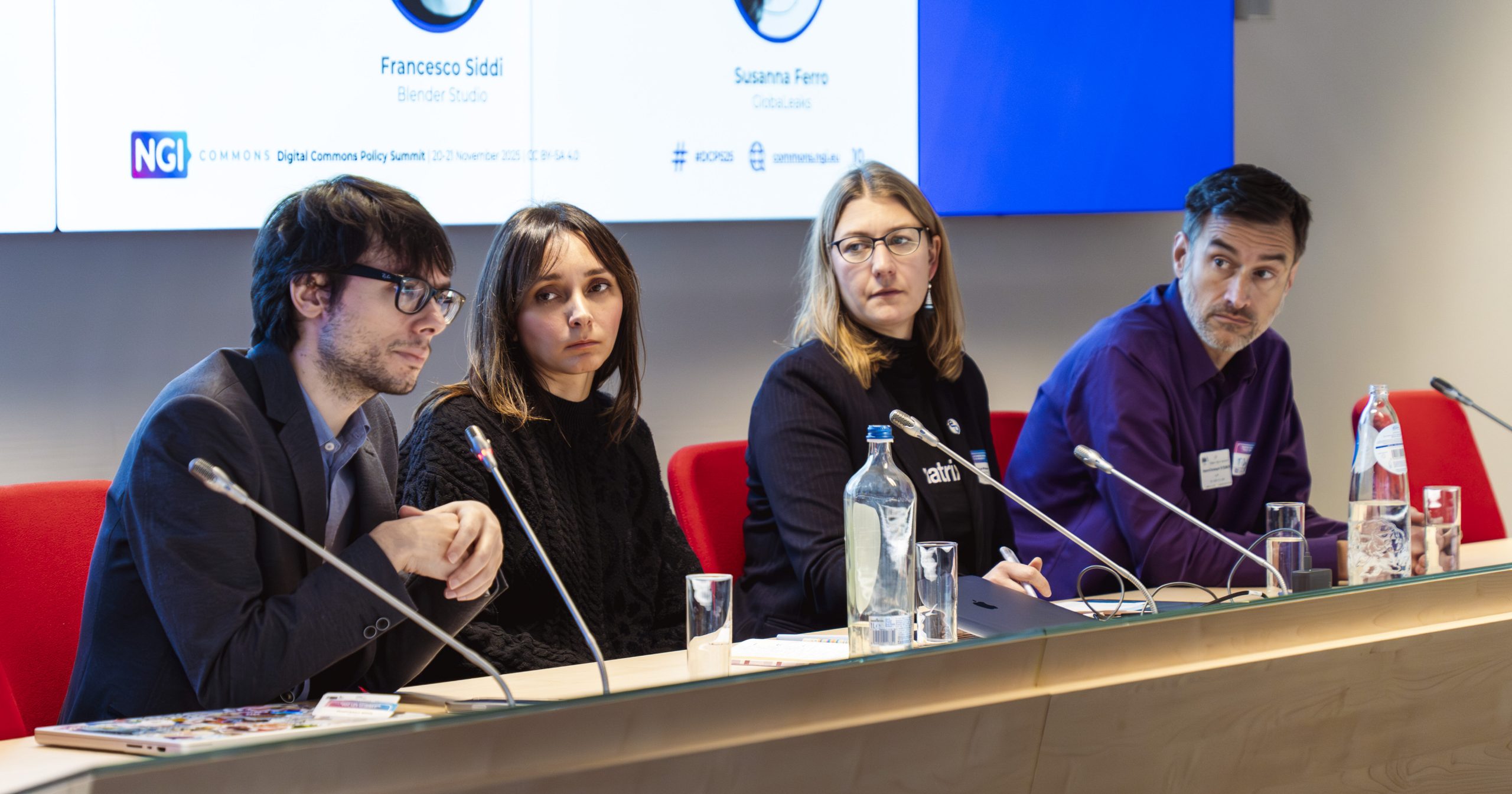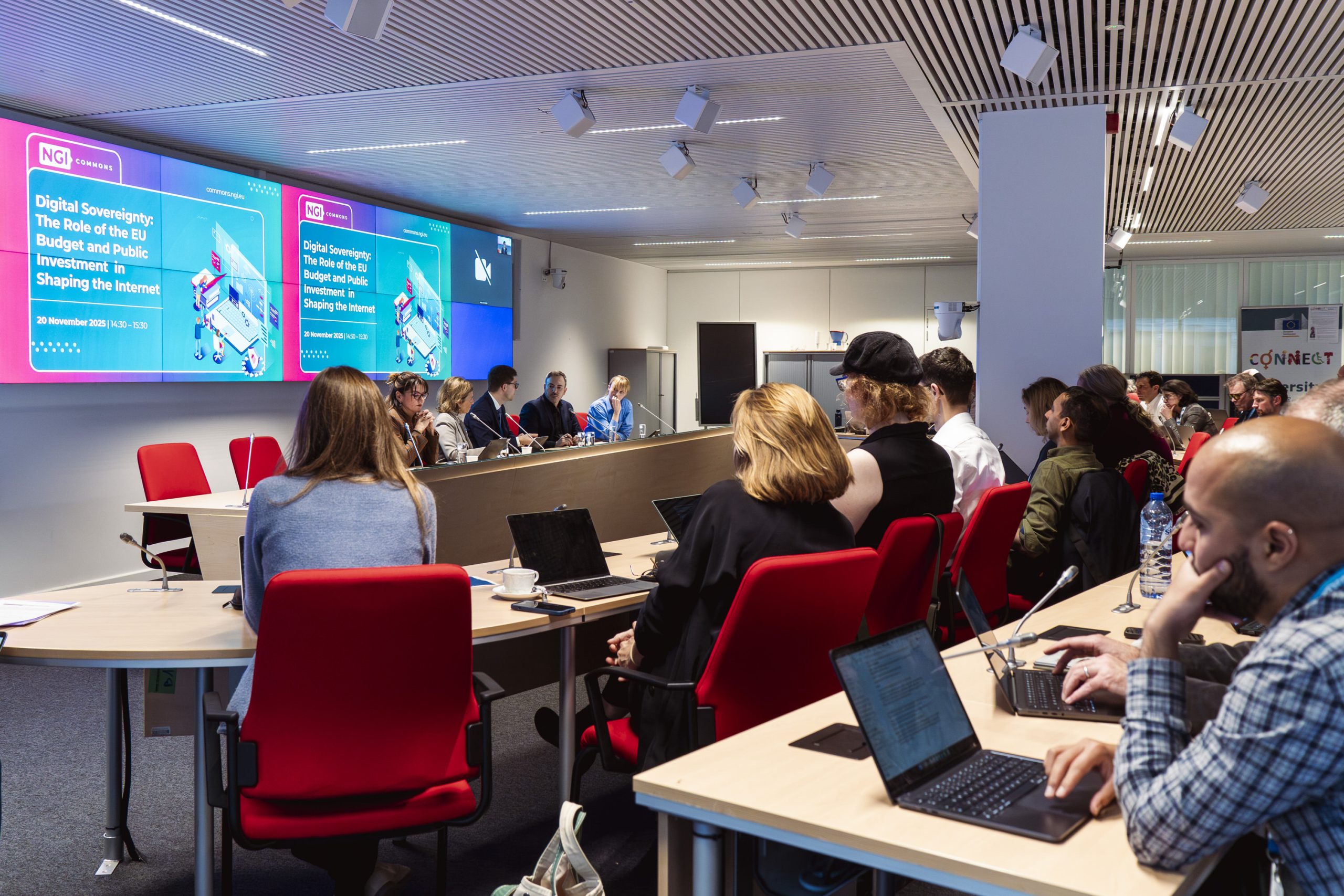
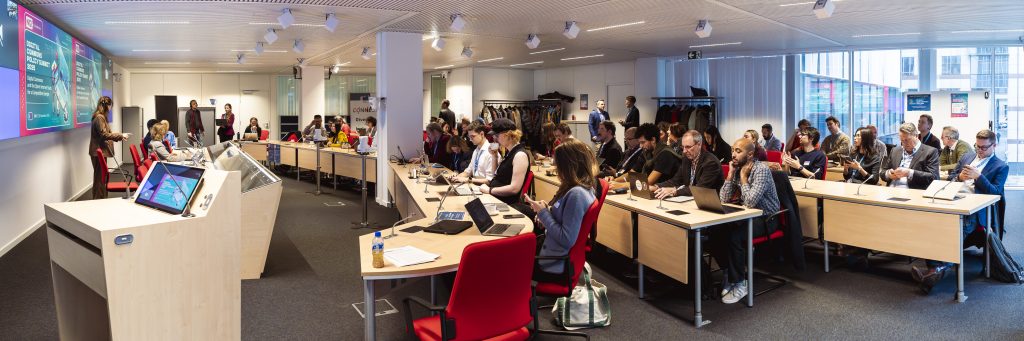
The Digital Commons Policy Summit 2025: Digital Commons and the Open Internet Stack for a Competitive Europe, organised by the NGI Commons project, brought together policymakers, public authorities, and representatives of the open-source and Digital Commons communities in Brussels on 20-21 November. The Summit’s purpose was to discuss the strategic role of Digital Commons in advancing Europe’s digital sovereignty, technological autonomy, and competitiveness. A clear message emerged: the question for Europe is no longer whether to adopt and scale Digital Commons, but how.
Martel alongside the NGI Commons partners were there and organised this first major policy event at the European Commission premises. High-level policy speakers underscored that Digital Commons constitute essential infrastructure for Europe’s future. They called for structural reforms in public procurement, sustainable funding models, and governance to enable operational deployment at scale. The newly established Digital Commons European Digital Infrastructure Consortium (EDIC) was widely recognised as a critical mechanism to coordinate Member State actions and accelerate implementation.
Digital Commons refer to open-source software and infrastructure that is community-driven and aligned with democratic governance principles, distinguishing them from simple code repositories. They are increasingly viewed as the backbone of a resilient, future-ready European digital ecosystem.
Public administrations need confidence in open-source solutions,(…)Open source is not optional—it is the path forward. And it can only work through collaboration, because collaboration is the very nature of open source.
Fabrizia Benini, Head of Future Internet, DG CONNECT.
Key insights from the Summit
1. The Digital Commons EDIC launch
A major announcement came from Fabrizia Benini, Head of Future Internet, DG CONNECT, who stated that the Digital Commons EDIC will be officially launched on 11 December 2025. This new structure will enable Member States to collaborate more efficiently and accelerate the deployment of Digital Commons. EDIC is a legal person designed as a long-term mechanism with unlimited duration, with Member States in the “driving seat”. It is intended to bridge the needs of Member States with the work of open-source communities.
2. Procurement reform is a strategic imperative
A persistent challenge is the reliance on rigid procurement rules that favour proprietary solutions and price over strategic criteria. Participants emphasised the need for procurement to evolve into a strategic industrial policy instrument. Sachiko Muto of OpenForum Europe highlighted the transformative power of using non-price criteria to prioritise sustainable open-source solutions. A concrete proposal for change included prohibiting procurement requirements that create dependencies on specific technologies or vendors, as they effectively exclude open-source alternatives.
3. Securing sustainable, long-term funding
The sustainability of key Digital Commons is undermined by fragmented funding and complex bureaucratic processes. The summit highlighted the urgent need for multi-year, stable financing frameworks. The European Competitiveness Fund was identified as a potential anchor for such investment. Representatives of projects like Matrix.org and Blender Studio noted that administrative overhead is the biggest challenge to accessing public funding, stressing that simplicity in funding mechanisms is essential.
The urgency of this focus stems from Europe’s structural dependencies in critical digital areas, which threaten its technological autonomy. Digital Commons offer a path for the EU to remain both sovereign and open, enabling collaboration without compromising strategic autonomy. The discussions throughout the summit reinforced the growing recognition that the shift toward Digital Commons is critical for technological sovereignty, competitiveness, and resilience.
The effective operationalisation of Digital Commons will be a decisive factor in achieving the EU’s strategic objectives, particularly the Digital Decade goals. By building a robust Open Internet Stack based on Digital Commons, the EU is ensuring that public institutions, businesses, and citizens have genuine alternatives to proprietary, monopolistic platforms. This fosters freedom of choice, which is essential for both competition and democratic governance. Ultimately, Digital Commons provide Europe with the tools to control its own technological destiny and remain a self-determined, democratic society.
The Digital Commons Policy Summit 2025 concluded with a call for continued action. Participants are invited to continue the discussion under the umbrella of the Digital Commons Task Force.