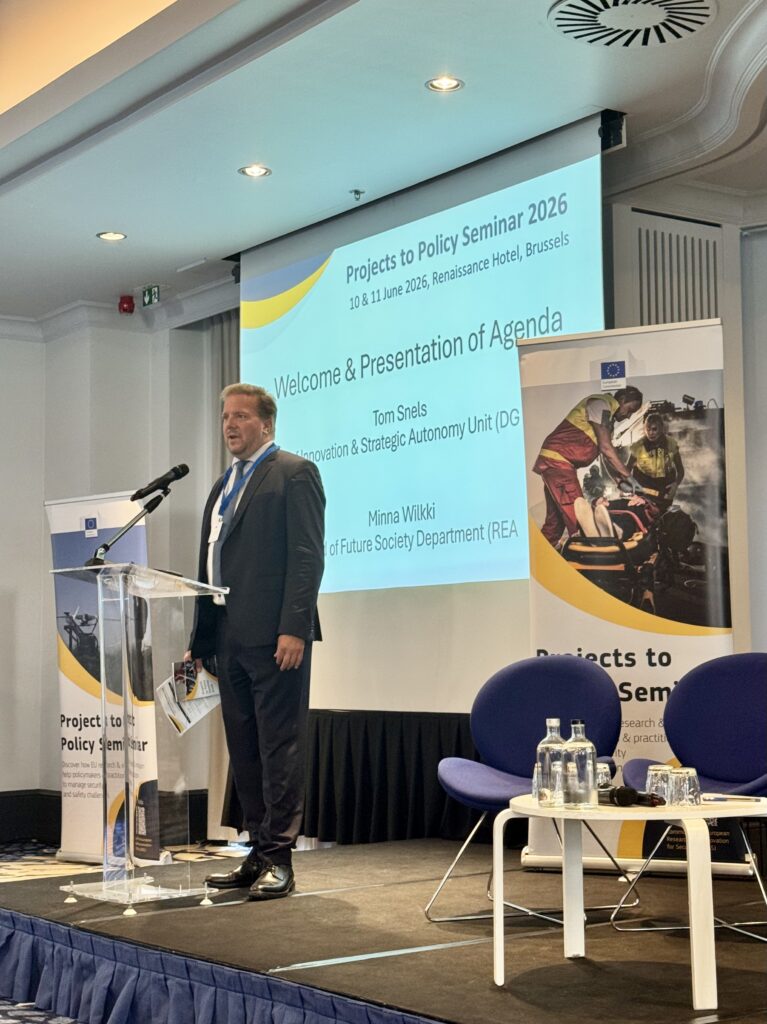

On 31 March and 1 April 2025, Martel joined the Global Multistakeholder High Level Conference on the Governance of Web 4.0 and Virtual Worlds in Brussels. The event was co-organised by the European Commission and the 2025 Polish Presidency of the Council of the EU. Its aim: kickstarting a global conversation on the future governance of virtual worlds and Web 4.0.
The event brought together global policymakers, technologists, academics and civil society leaders. The focus was on policy and technical solutions for an ethical and value-driven shift to Web 4.0, grounded in multistakeholder internet governance principles. The conference featured parallel sessions, keynote talks, and a high-level outcome discussion. Participants, including Martel’s Chief Innovation Officer, dr. Giovanni Rimmasa and Policy Analyst Francesco Panella, contributed with statements on the topics discussed during the meeting.
The plenary sessions at the conference reinforced the importance of maintaining and evolving a multistakeholder governance model to ensure that the development of the internet remains inclusive and not dominated by private interests. Policies play a crucial role in this process—not only to safeguard citizens’ rights and limit the influence of dominant tech players, but also to support smaller actors in entering and competing in the market. A key concern was the growing risk of a fragmented “splinternet,” which could undermine the global and open nature of the web. In this context, decentralised technologies were highlighted as promising tools to support more democratic and resilient internet structures. While the discussions focused more on policy and governance, technical aspects were kept at a high level.
Against this backdrop, the parallel sessions provided a space to explore these issues in more depth, focusing on specific challenges and opportunities related to Web 4.0 and virtual worlds. Martel took an active role in several of these sessions, contributing targeted statements that reflected both our practical experience and strategic vision:
- Governance: multistakeholder by design. A recurring theme was the need to maintain and strengthen multistakeholder governance. Martel highlighted that a functional and inclusive governance model is not only a way to ensure diverse representation but also a practical means to increase adoption and trust. In a fragmented European digital ecosystem, coordination matters—especially for non-technical users.
- Standardisation: cooperation and early engagement. In the session on standardisation, Martel called attention to three enablers: open-source reference implementations, early societal engagement, and geopolitical awareness. Our experience in projects like 6G4Society and INPACE shows how these factors are essential for accessible and globally relevant standards.
- Human rights and trust: the need for safe virtual spaces. Martel emphasised that building virtual worlds isn’t just a technical challenge—it’s also about protecting personal freedoms and creating respectful environments. We referenced the EU Strategy on Virtual Worlds and the Citizens’ Panel as foundations for human-centric design, echoing Tim Berners-Lee’s original vision of the web as a collaborative space.
- Resilience and security: immersion vs. safety. Web 4.0 systems need to be both resilient and secure. But there’s a trade-off: more immersive experiences can reduce user scepticism—making them more vulnerable to manipulation. Martel proposed that “secure by design” in this context often means “as immersive as needed, not more.”
- Fairness and regulation: enabling small players. Martel supported the role of regulations like the Digital Markets Act to curb dominance by large platforms. But we also warned that overly complex legal frameworks can unintentionally lock out smaller innovators. A level playing field needs both guardrails and flexibility.
- Accessibility and inclusion: tech must work for everyone. We stressed the importance of designing for multiple sensory profiles and neurodiversity—not just for ethical reasons, but also to increase resilience and system robustness. Education and digital skills training remain essential to bridge the divide.
- Decentralisation: turning fragmentation into strength. Martel promoted decentralised architectures as a way to reduce concentration of control, increase energy efficiency, and support a more democratic internet. We argued that Europe’s fragmented ecosystem could become an asset for building inclusive, future-ready digital infrastructures.
- Protocols: modernising without breaking the web. Evolution should be careful and collaborative. The transition to Web 4.0 still relies heavily on decades-old protocols and systems. Martel pointed to Digital Commons efforts like NGI Commons as spaces where policy, civil society, and tech communities can work together toward sustainable innovation.
The Brussels conference showed that shaping the future internet will require coordination, creativity, and strong values. Martel remains committed to supporting a Web 4.0 that is secure, open, inclusive, and shaped by many voices.